
Washer–dryer combos promise the convenience of two appliances in one, but they vary widely in performance, capacity, and efficiency. Some models are built for full household loads with advanced drying systems, while others prioritize compact size and affordability. This comparison breaks down four popular options to help you choose the one that best fits your space, budget, and laundry needs.
Comparison Table
Scroll <- left or right -> to see more data
| Model | Type | Capacity | Drying System | Position in Market |
|---|---|---|---|---|
| GE PFQ97HSPVDS | Premium all-in-one | 4.8 cu ft | Heat pump (ventless) | High-end, full-size combo |
| LG WM3555HWA | Compact all-in-one | 2.4 cu ft | Condenser (ventless) | Space-saving apartment unit |
| Midea Ventless Combo | Budget all-in-one | ~2.7–3.1 cu ft (varies) | Condenser (ventless) | Entry-level smart combo |
| COMFEE All-in-One | Budget compact combo | ~2.7 cu ft | Condenser (ventless) | Cheapest mainstream option |
Disclosure:As an Amazon Associate, I earn from qualifying purchases
2. Detailed Reviews
1) GE PFQ97HSPVDS (Best Performance & Capacity)
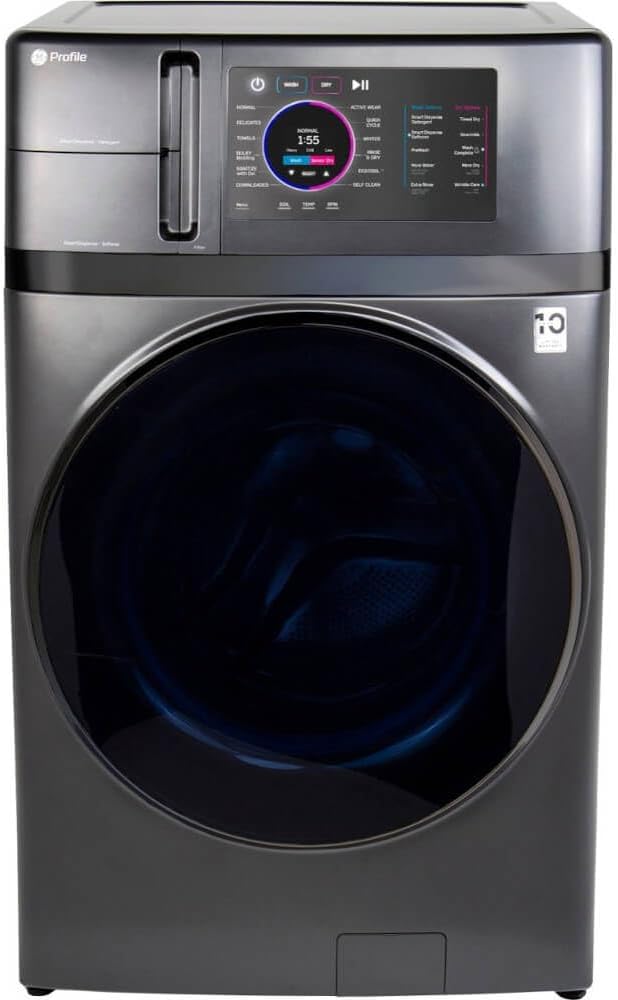
Strength: High-end performance + large load handling
This is the most advanced machine in the group. It uses a ventless heat pump system, which is significantly more energy-efficient than traditional condenser dryers and handles larger loads more effectively.
Pros
- Massive 4.8 cu ft capacity (closest to traditional washers)
- Heat pump drying = lower energy use, gentler fabric care
- Strong smart features (SmartHQ app, auto-dispense detergent)
- Can handle bulky items (comforters, towels)
Cons
- Very long full cycles (often 2–4+ hours)
- Expensive upfront cost
- Complex lint/filter maintenance system (known pain point)
- Heavy and harder to install
Reality check
- One of the few combos that feels like a “real washer + dryer replacement”
- Best for users who want premium performance in one machine

2) LG WM3555HWA (Best Compact Premium Unit)
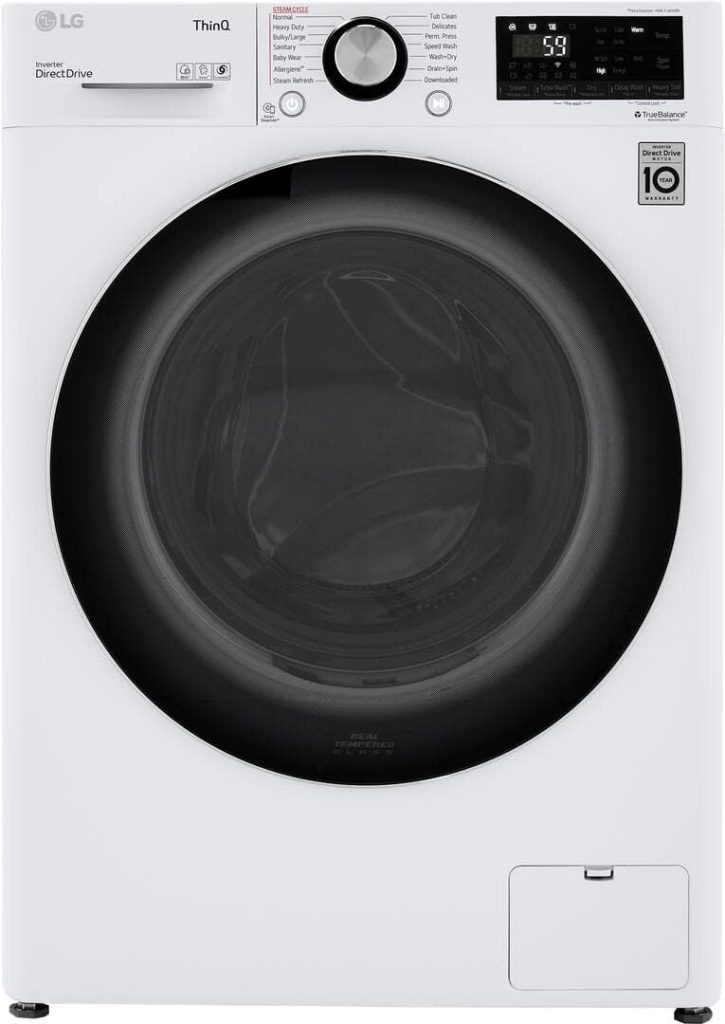
Strength: Compact size + reliability balance
This LG unit is designed for tight spaces like apartments or studios, not heavy household laundry loads.
Pros
- Very compact footprint (fits under counters/closets)
- Reliable LG motor system (quiet + stable operation)
- Smart diagnostics (ThinQ app support)
- Good wash quality for small loads
Cons
- Very small capacity (2.4 cu ft)
- Not suitable for bulky bedding or large families
- Drying cycles are slow due to ventless design
- Requires frequent lint/drain maintenance
Reality check
- Excellent for 1–2 person households
- Not ideal if you do frequent or heavy laundry loads
3) Midea Ventless Washer–Dryer Combo (Best Budget Smart Option)
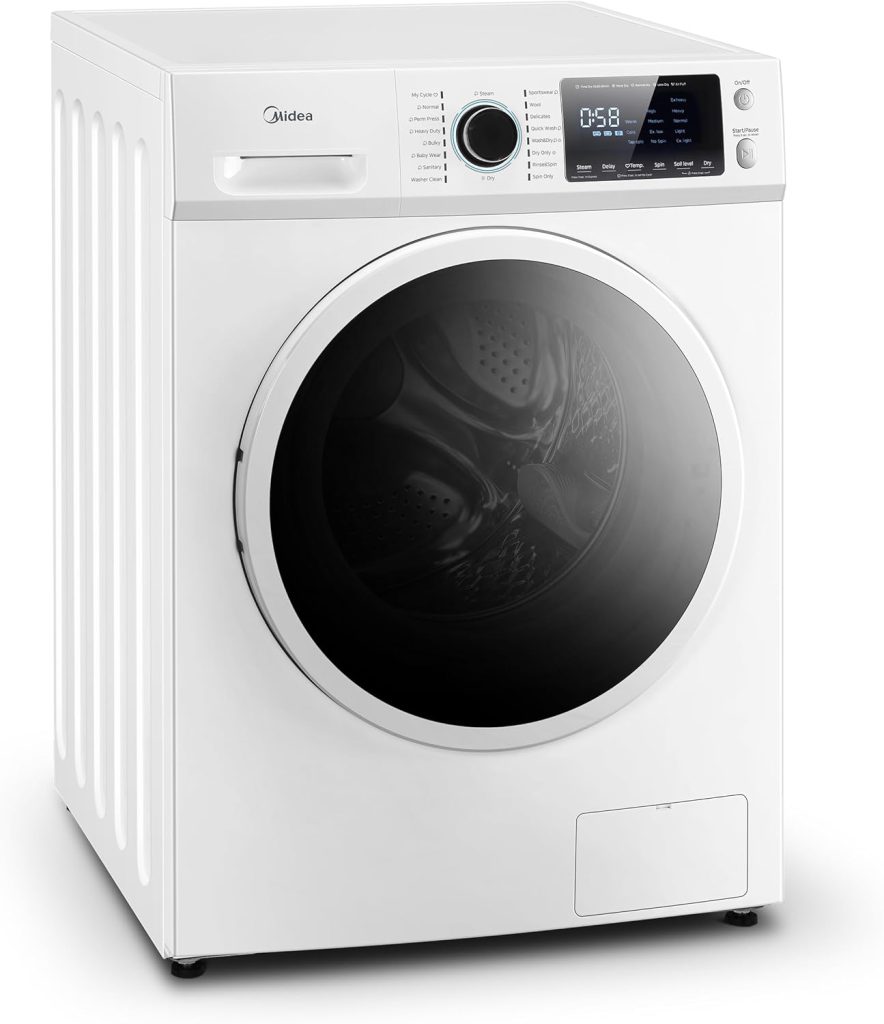
Strength: Affordable automation + decent functionality
Midea targets the mid-to-low price segment, offering basic smart features and acceptable performance.
Pros
- Lower price compared to GE/LG
- Ventless installation (no duct needed)
- Simple interface + basic smart controls
- Decent wash performance for everyday clothes
Cons
- Drying performance is inconsistent on heavier loads
- Build quality is more basic (plastics, vibration control)
- Longer drying times than LG/GE
- Less powerful spin extraction
Reality check
- Good “entry into combo machines”
- Better for light/moderate laundry use only
4) COMFEE Washer–Dryer Combo (Ultra Budget Option)
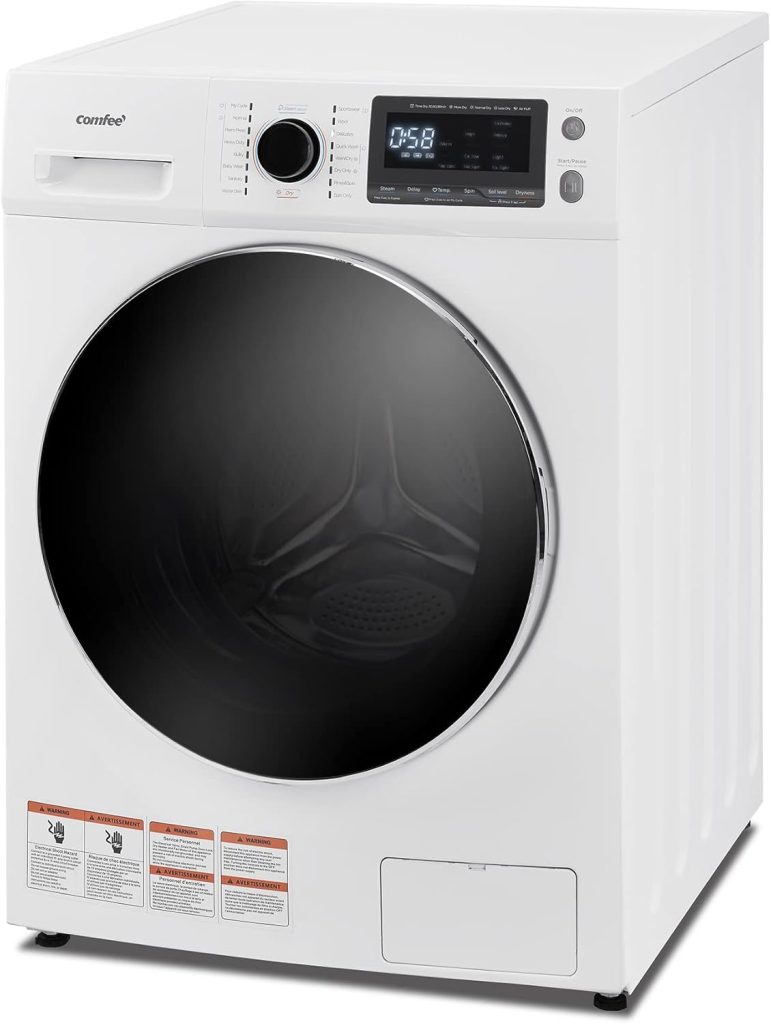
Strength: Lowest cost entry point
COMFEE is essentially a budget appliance brand focused on affordability over performance depth.
Pros
- Very affordable compared to competitors
- Compact and easy to install
- Basic wash + dry functionality works for light clothing
- Simple controls (minimal learning curve)
Cons
- Weak drying efficiency on thick fabrics
- Smaller and less durable drum system
- Limited smart features
- Longer total cycle times and occasional damp results
Reality check
- Works best as a secondary or occasional-use unit
- Not ideal for long-term heavy laundry demand
3) Key Performance Comparison (Real-World Factors)
| Factor | GE PFQ97HSPVDS | LG WM3555HWA | Midea | COMFEE |
|---|---|---|---|---|
| Wash quality | ⭐⭐⭐⭐⭐ | ⭐⭐⭐⭐ | ⭐⭐⭐ | ⭐⭐⭐ |
| Drying performance | ⭐⭐⭐⭐⭐ | ⭐⭐⭐ | ⭐⭐⭐ | ⭐⭐ |
| Load capacity | ⭐⭐⭐⭐⭐ | ⭐⭐ | ⭐⭐⭐ | ⭐⭐ |
| Speed | ⭐⭐⭐ | ⭐⭐ | ⭐⭐ | ⭐⭐ |
| Energy efficiency | ⭐⭐⭐⭐⭐ | ⭐⭐⭐⭐ | ⭐⭐⭐ | ⭐⭐⭐ |
| Reliability | ⭐⭐⭐⭐ | ⭐⭐⭐⭐ | ⭐⭐⭐ | ⭐⭐ |
| Value for money | ⭐⭐⭐ | ⭐⭐⭐⭐ | ⭐⭐⭐⭐⭐ | ⭐⭐⭐⭐⭐ |
4. Major Insight (Important Reality)
Across all four models, there is one consistent truth:
⚠️ All washer–dryer combos sacrifice speed for convenience.
- Drying is always slower than standalone dryers
- Full cycles often take 2–4+ hours
- Ventless systems = efficiency + compactness, but slower drying
This is not a defect—it is the core engineering tradeoff of all-in-one machines.
🧠 Final Recommendation
🏆 Best Overall (No Compromise)
👉 GE PFQ97HSPVDS
Choose this if you want:
- Near full-size laundry performance
- Best drying quality among combos
- Strong smart features
- You don’t mind premium price + long cycles
✔ Best for families or heavy laundry users in small spaces
🏠 Best for Small Apartments
👉 LG WM3555HWA
Choose this if you want:
- Compact footprint
- Reliable daily laundry for 1–2 people
- Quiet operation
✔ Best for studios, apartments, or minimal laundry loads
💰 Best Budget Choice
👉 Midea Combo
Choose this if you want:
- Affordable entry into combo machines
- Light household use
✔ Best balance of price vs basic functionality
🪙 Ultra Budget Option
👉 COMFEE Combo
Choose this only if:
- Budget is the main constraint
- Laundry volume is very low
✔ Works, but least durable and least efficient