
Building a home gym is a bit like dating—you want something sturdy, reliable, and not too wobbly when things get intense. The trick is finding equipment that doesn’t just look tough but actually holds up when you’re sweating bullets.
Spoiler: some towers stand tall, others… lean a little too hard on your patience. Here are my recommendations based on my research.
Comparison
Scroll <-left & right -> to view more data
| Model | Key Features | Dimensions & Adjustability | Weight Capacity | Pros | Cons |
|---|---|---|---|---|---|
| Sportsroyals Power Tower |
Multi-function. Sturdy steel frame. |
Adjustable height . | ~400 lbs | Durable build, ergonomic backrest, stable base. |
Assembly takes time, footprint is larger. |
| K KiNGKANG Power Tower |
Square tube design, elbow/head pads, 6-level height adjust. |
29.1" W × 40.9" L × 68.8–90.5" H |
350 lbs | Affordable price, family-friendly adjustability, padded comfort. |
Lower capacity, less stable for heavy users. |
| Relife Power Tower |
9 height levels, 4 backrest adjustments, suction cup base. |
42.9" L × 35.4" W × 88.6" H |
450 lbs | Highly stable, versatile, locknut safety, strong reviews . |
Heavier unit, takes more space. |
| Zenova Power Tower |
Multi-function. Height adjustable. |
~Standard free-standing dimensions |
~330 lbs | Compact design, budget-friendly. |
Limited reviews, lighter-duty, less proven durability. |
Disclosure:As an Amazon Associate, I earn from qualifying purchases
Takeaways
- Sportsroyals: Best balance of durability and versatility; ideal for consistent home gym users.
- K KiNGKANG: Good entry-level option, especially for families or lighter users.
- Relife: Most robust and stable, with excellent adjustability and safety features; great for serious strength training.
- Zenova: Compact and affordable, but less reliable for heavy or long-term use.
Recommendations
- The Zenova is only worth considering if space and price are your top priorities, but it’s not as proven.
- If you want maximum stability and longevity, go with the Relife Power Tower. Amazon link here
- If you’re looking for a solid mid-range option, the Sportsroyals is excellent. Amazon link here
- For budget-conscious beginners, the K KiNGKANG works well. Amazon link here
#1. Relife Power Tower
This tower feels like the tank of the category—heavy, stable, and built to last. The suction cup base and locknut safety system give it a reassuring sturdiness during workouts.
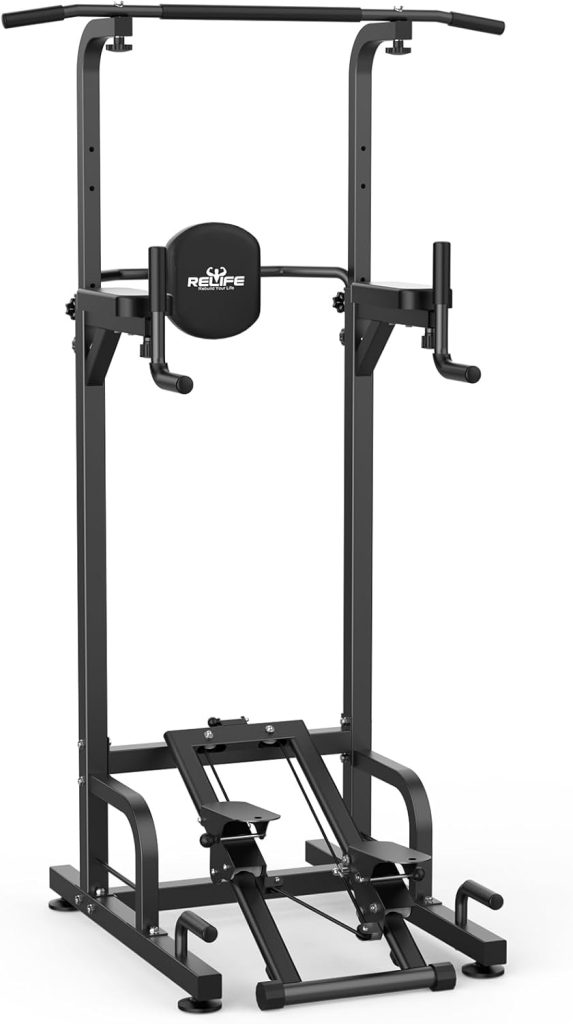
With 9 height levels and adjustable backrest, it adapts well to different users. It’s a bit bulky, so you’ll need space, but the trade-off is rock-solid performance.
Overall, it’s the best choice for serious lifters who want reliability.
Pros
- Rock-solid stability
- High weight capacity (450 lbs)
- 9 height levels + adjustable backrest
- Strong user ratings (4.5★)
Cons
- Heavy to move around
- Bulky footprint

#2. Sportsroyals Power Tower
This one strikes a nice balance between durability and versatility. The steel frame feels premium, and the ergonomic backrest makes knee raises more comfortable.
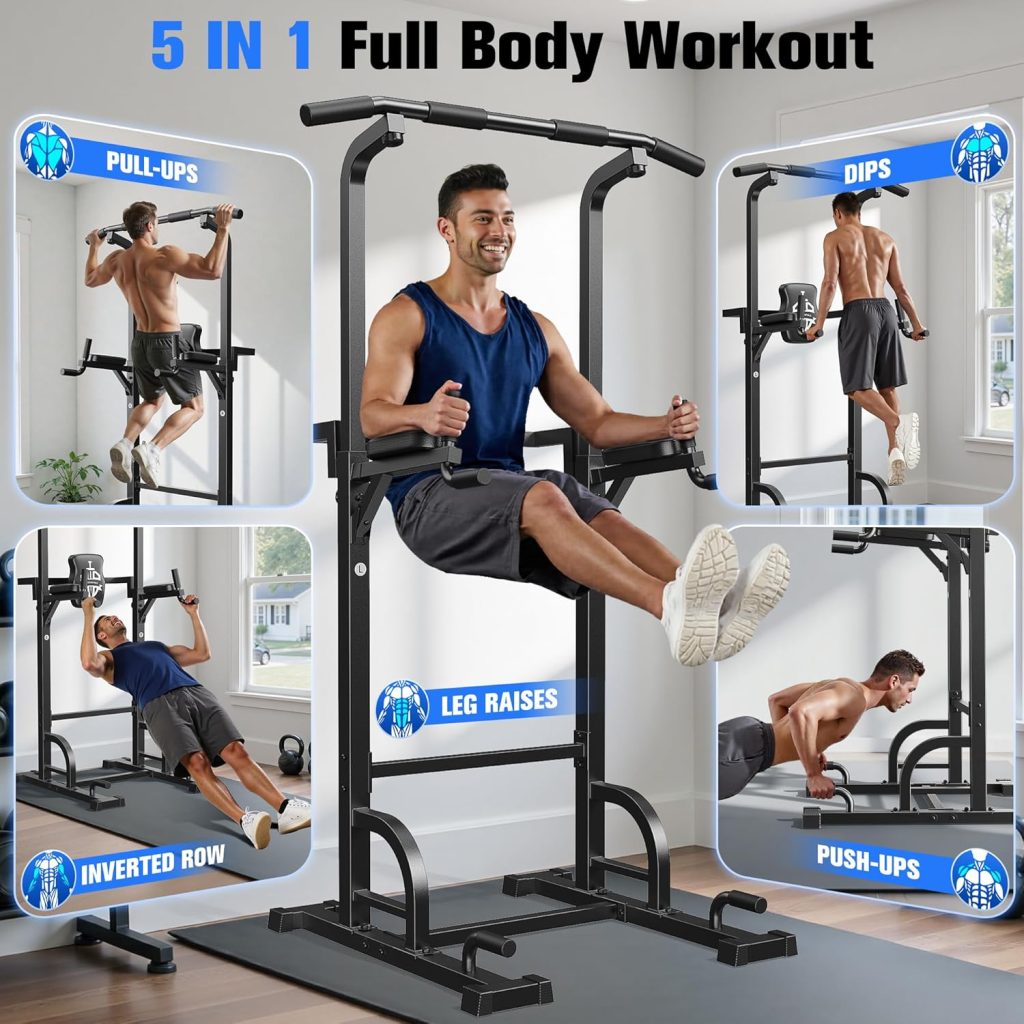
Adjustable height options let you tailor it to your workout style. Assembly can be a bit of a project, and it takes up a fair amount of space. Still, it’s a dependable mid-range option that delivers solid value.
Pros
- Durable steel frame
- Ergonomic backrest
- Stable base for pull-ups/dips
- Adjustable height (64–88 in)
Cons
- Large footprint
- Time-consuming assembly
#3. K KiNGKANG Power Tower
This tower is the budget-friendly pick, offering decent features without breaking the bank. The 6-level height adjustment makes it family-friendly, and the padding adds comfort. It’s compact compared to the bigger towers, which is great for smaller spaces.
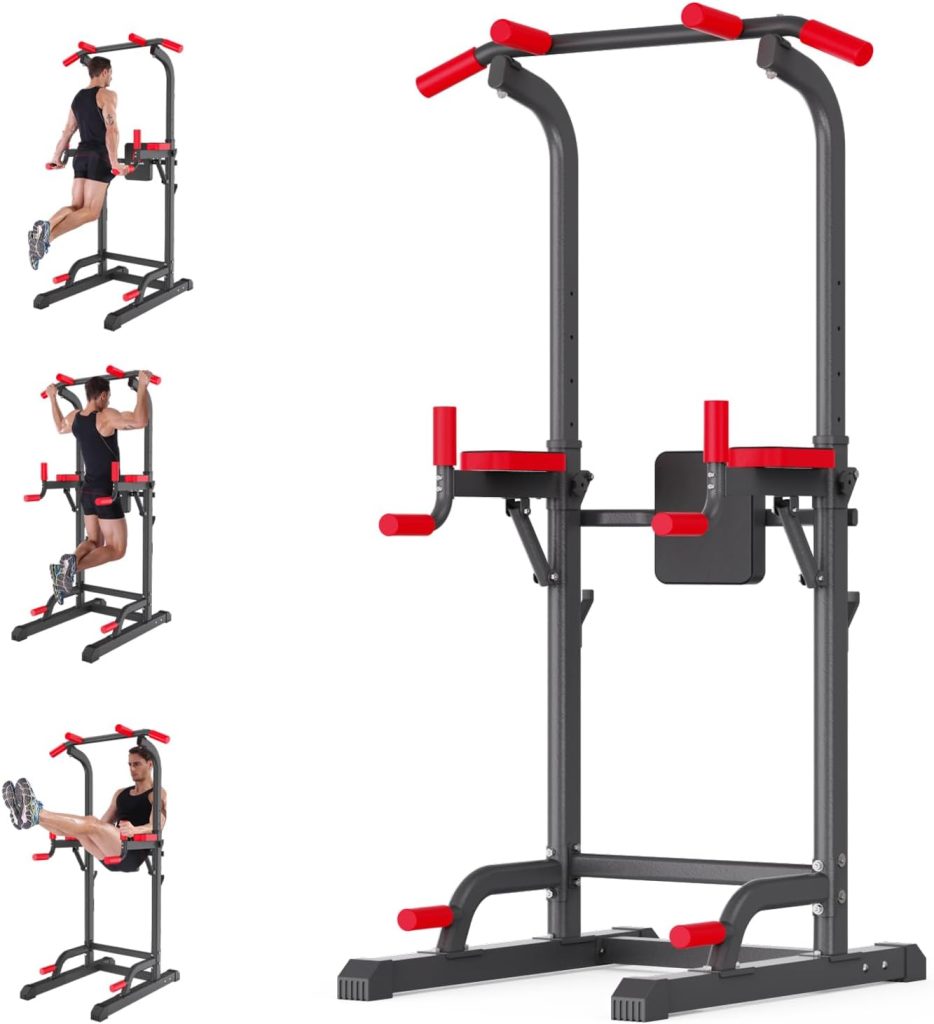
The downside is lower weight capacity and less stability under heavy loads. Best suited for beginners or lighter users who want a starter tower.
Pros
- Affordable price
- 6-level height adjustability
- Comfort padding for elbows/head
- Compact size
Cons
- Less stable for heavy workouts
- Lower weight capacity (350 lbs)
#4. Zenova Power Tower
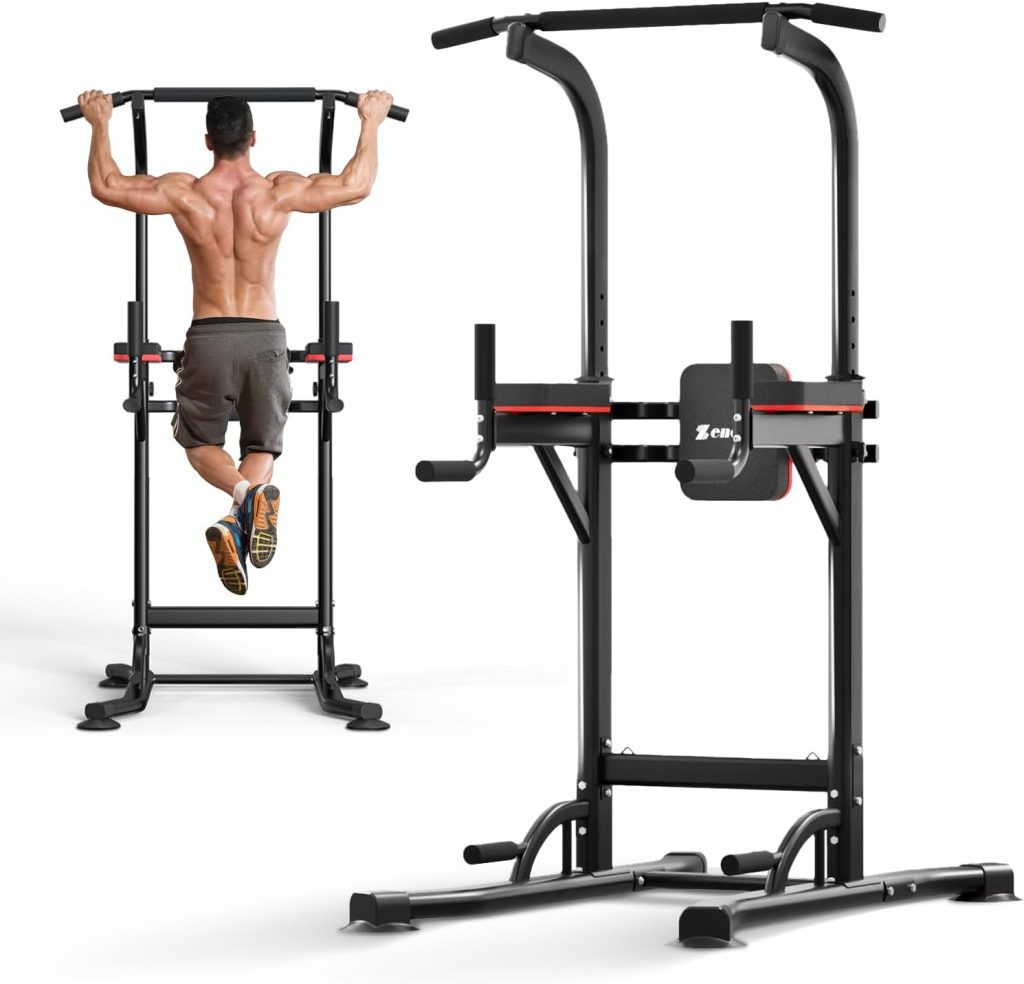
Zenova’s tower is compact and affordable, making it appealing for small spaces. It covers the basics—pull-ups, dips, and squats—without overcomplicating things. The design is straightforward, but it doesn’t inspire the same confidence as sturdier models.
With limited reviews and lighter-duty build, durability is a question mark. It’s fine for casual users, but not ideal for long-term heavy training.
Pros
- Compact design
- Affordable price
- Multi-function setup
- Space-saving footprint
Cons
- Lower weight capacity (~330 lbs)
- Limited reviews/brand reputation