
Choosing the right external SSD isn’t just about storage—it’s about speed, durability, and how reliably it performs when you actually need it. The Crucial X9 1TB Portable SSD, SanDisk Extreme Portable SSD 2TB, and Samsung T7 Shield 1TB Portable SSD each target a different type of user, from budget buyers to performance-heavy workflows. Here’s a clear breakdown so you can pick the one that fits your use case without overpaying or underbuying.
Comparison Table
Scroll <= left or right => for more data
| Attribute | Crucial X9 1TB Portable SSD |
SanDisk Extreme Portable SSD 2TB |
Samsung T7 Shield 1TB Portable SSD |
|---|---|---|---|
| Capacity | 1TB | 2TB | 1TB |
| Max Read Speed | ~1,050 MB/s | ~2,000 MB/s | ~1,050 MB/s |
| Max Write Speed | ~1,050 MB/s | ~2,000 MB/s | ~1,000 MB/s |
| Interface | USB 3.2 Gen 2 (10Gbps) | USB 3.2 Gen 2×2 (20Gbps) | USB 3.2 Gen 2 (10Gbps) |
| Real-world tier | Budget / mid-range | High-performance | Balanced mid-range |
| Durability | Drop مقا ~2m | IP55 + drop ~2–3m | IP65 + rugged rubber shell |
| Encryption | Software-based | AES 256-bit hardware | AES 256-bit hardware |
| Weight / Build | Very light plastic | Aluminum + silicone | Rubberized rugged body |
| Compatibility | Very broad (plug & play) | Broad (needs Gen2x2 for full speed) | Very broad |
| Warranty | ~3 years | ~5 years | ~3 years |
| Best for | Budget backups, casual use | Heavy transfers, pro workflows | Travel, reliability, durability |
Disclosure:As an Amazon Associate, I earn from qualifying purchases
🧠 Practical Breakdown (What actually matters)
1. Performance (the real differentiator)
- SanDisk wins clearly — it’s ~2× faster on paper (2000 MB/s), but only if your device supports USB 3.2 Gen 2×2. Otherwise, it drops closer to ~1000 MB/s.
- Crucial X9 & Samsung T7 Shield sit in the same speed class (~1000 MB/s), which is already fast for most users.
👉 Translation:
- Editing 4K video / huge file transfers → SanDisk
- Normal backups / gaming storage → all three feel similar
2. Durability & reliability
- Samsung T7 Shield is the most rugged (IP65, rubberized, built for travel abuse).
- SanDisk is also rugged (IP55 + aluminum core), but more “pro gear” than “throw-in-bag gear.”
- Crucial X9 is durable but clearly budget-focused (plastic build, fewer protections).
3. Value vs capacity
- SanDisk gives 2TB, which is a major advantage if you store:
- video footage
- games
- large datasets
- Crucial X9 is usually the cheapest per GB, making it a strong budget pick.
4. Real-world caveats (important)
From user reports:
- Crucial X9: occasional mounting issues reported (especially macOS edge cases)
- SanDisk: some long-term reliability complaints in community threads (firmware/controller issues)
- Samsung T7 Shield: generally the most consistent/reliable reputation
👉 None are “perfect,” but Samsung tends to be the safest bet.
🏁 Verdict (no fluff)
- Best overall performance: SanDisk Extreme Portable SSD (if your port supports it). Get it here on Amazon
- Best reliability + rugged use: Samsung T7 Shield. Get it here on Amazon
- Best budget pick: Crucial X9. Get it here on Amazon
Crucial X9 1TB Portable SSD
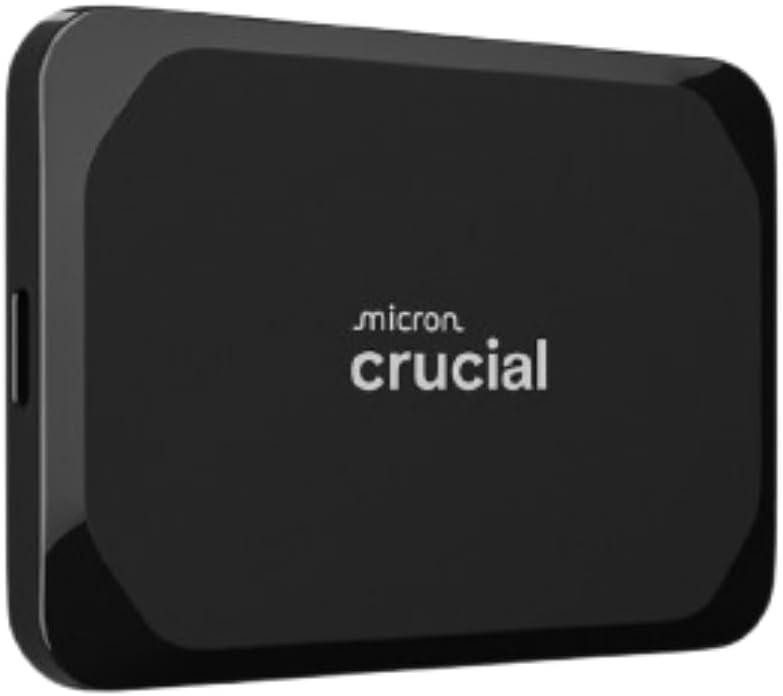
The Crucial X9 positions itself as a budget-friendly, no-frills portable SSD, and it executes that role well. With read and write speeds up to around 1,050MB/s over USB 3.2 Gen 2, it’s significantly faster than traditional hard drives and perfectly adequate for everyday workloads like backups, media storage, and casual gaming libraries.
Its lightweight polycarbonate build and plug-and-play compatibility across Windows, macOS, consoles, and mobile devices make it extremely accessible, especially for users who want something simple that just works out of the box.
Where the X9 trades off is in premium features and build quality. While it does offer drop protection up to about 2 meters and resistance to shock and temperature changes, it lacks the ruggedized feel and environmental sealing seen in higher-end competitors.
There’s also no hardware encryption, which may matter if you’re storing sensitive data. Overall, it’s best viewed as a reliable, cost-efficient storage tool rather than a performance or durability leader.
SanDisk Extreme Portable SSD
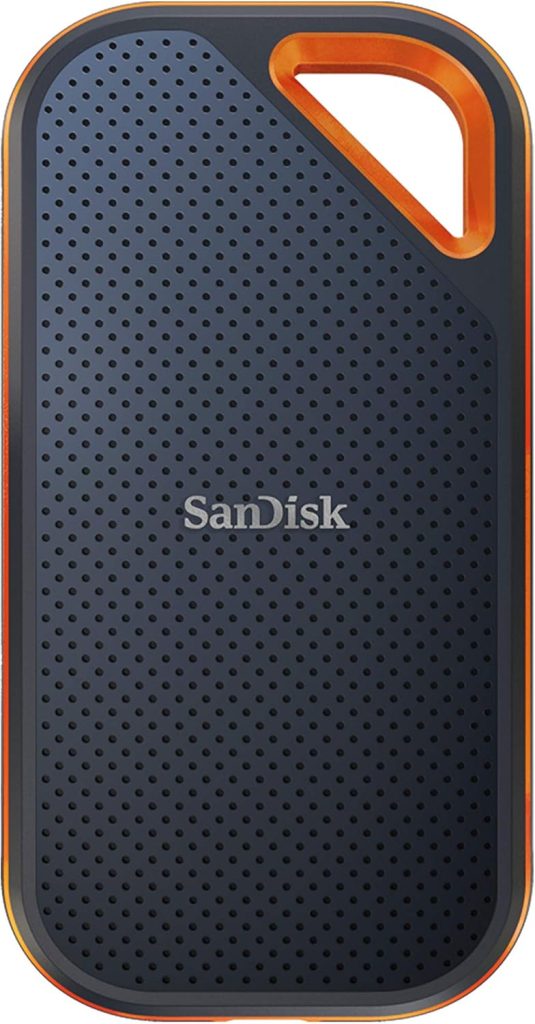
The SanDisk Extreme Portable SSD strikes a balance between performance, capacity, and rugged design, making it a popular choice for creatives and professionals on the move. With speeds up to roughly 1050MB/s and a USB 3.2 Gen 2 interface, it delivers fast file transfers suitable for large video files, photography workflows, and external game storage.
The standout advantage here is the 2TB capacity, giving users significantly more room compared to typical 1TB drives without sacrificing portability.
Durability is a major strength, with IP55 water and dust resistance, drop protection, and a silicone shell, making it well-suited for travel or outdoor use. It also includes 256-bit AES hardware encryption, which adds a layer of security for sensitive data.
That said, while performance is strong, it doesn’t always exceed other drives in its class unless paired with optimal hardware, and long-term reliability perceptions vary depending on usage patterns—so it’s best used with proper backup practices.
Samsung T7 Shield
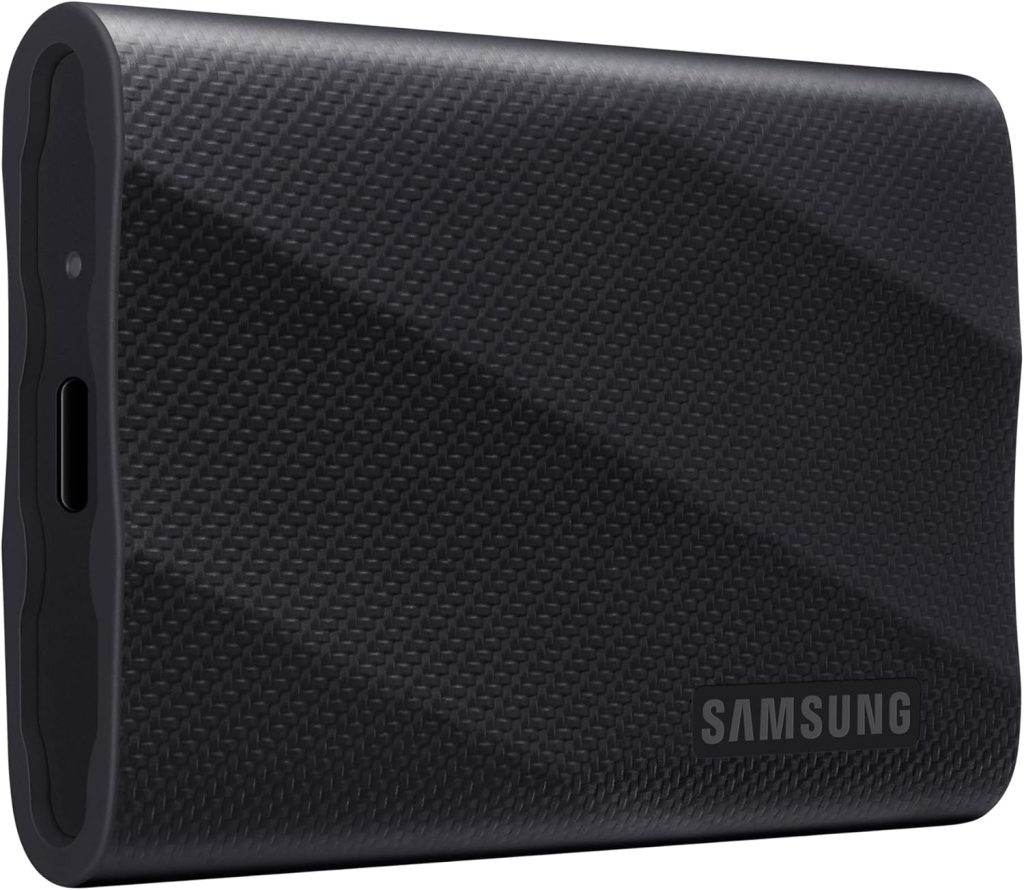
The Samsung T7 Shield is widely regarded as one of the most dependable and well-rounded portable SSDs in its category. It delivers consistent speeds around 1,000MB/s, which, while not class-leading, are stable under sustained workloads—something that matters more than peak numbers for real-world tasks like video editing or large file transfers.
Samsung’s optimization and thermal management help maintain performance even during extended use, giving it an edge in reliability over many competitors.
Its defining feature is durability. With a rugged rubberized exterior and resistance to dust and water (IP-rated), the T7 Shield is designed for users who need a drive that can handle travel, fieldwork, or rough handling.
Combined with built-in AES 256-bit hardware encryption and a strong reputation for consistency, this SSD is ideal for users who prioritize data safety and long-term reliability over maximum speed or lowest price.