
Scrolling through the threads on Reddit — especially in communities like r/Appliances — what emerges is a surprisingly strong, often emotional, consensus about which refrigerator brands to trust … and which to avoid.
One of the most-referenced posts is titled something like “Fridge brands to buy vs not buy — my summary based on a quick scan.” The author opens with a blunt verdict:
“Bad Juju, stay away: LG and Samsung (Linear compressor, extra bad)”
In the same post, more conservative brands rise to favor:
“Decent (based on prior experience) – Whirlpool, Kitchenaid, GE?”
Many others in the thread echo that sentiment or expand on it. For example, one Redditor writes in a separate thread:
“For the love of all that is holy, do not buy an LG fridge. The compressors are faulty.”
And another — speaking of a common mistake in fridge shopping — warns:
“Do NOT buy Samsung without an extended warranty.”
Likewise, you’ll find people stressing that simple, no-frills fridges tend to last longer:
“I’m looking for something very simple, without an ice maker or water dispenser, and that will last for as long as possible.”
On the flip side, negative experiences with brands like Samsung and LG seem all too common. One of the most-read comment threads on Samsung fridges is titled plainly: “Do not buy Samsung fridges.”
Issues described? Frequent ice-maker malfunctions, dips or fluctuations in freezer/fridge temperatures, and even major problems like flooding — sometimes shortly after the warranty expires. (Reddit)
But it’s not always unanimous. Some Redditors argue things may be improving. In one 2024 post, a user pointed out that a “study” — based on service-call data — ranked LG among brands with good first-year reliability. Others on r/Appliances admitted they went with a brand like Bosch because even if the budget was tight, they preferred a fridge that “just works.”
Still, even among the more trusted names — like Whirlpool, GE or KitchenAid — Reddit users voice caveats. In one lament, an owner of a KitchenAid fridge wrote:
“The worst piece of crap I’ve ever owned. … Freezer cutting off randomly, the water never works. … 0/10 please avoid at all costs!!! Go LG instead!
That’s a reminder that no brand gets a perfect track record — even “safe” ones.
📊 What Outside Surveys & Data Experts Say
• Half of refrigerators get some problem; ~⅓ need repairs within 5 years
- According to a 2025 survey by Consumer Reports (CR), among refrigerators purchased new since 2014, around 50% have had some issue (ice-maker failure, water/ice dispenser faults, compressor issues, etc.)
- They estimate 33% will require a repair by the end of the fifth year of ownership.
- More serious problems — e.g. a breakdown where the fridge “stops keeping food cold” — occur in a non-trivial portion of cases.
That means modern refrigerators remain — statistically — a surprisingly risky long-term purchase. Many don’t survive 5 years without intervention.
• Ice-makers & dispensers are the biggest weak spots
- According to CR’s survey, the most commonly reported issues are with ice-makers and water/ice dispensers.
- Less commonly reported but more serious: compressor failures and temperature control failure (i.e. fridge/freezer not staying cold).
In short: added “convenience” features — smart dispensers, ice-makers, through-the-door water, etc. — correlate strongly with higher failure risk.
• Reliability differs a lot by configuration — top-freezer & bottom-freezer still safest
| Fridge configuration | Reliability trend / Owner satisfaction (general) |
|---|---|
| Top-freezer (classic old-school type) | Highest predicted reliability among fridge types. Almost always simpler, fewer parts to break. |
| Bottom-freezer | Slightly more complex but often good reliability — certain brands perform relatively well. |
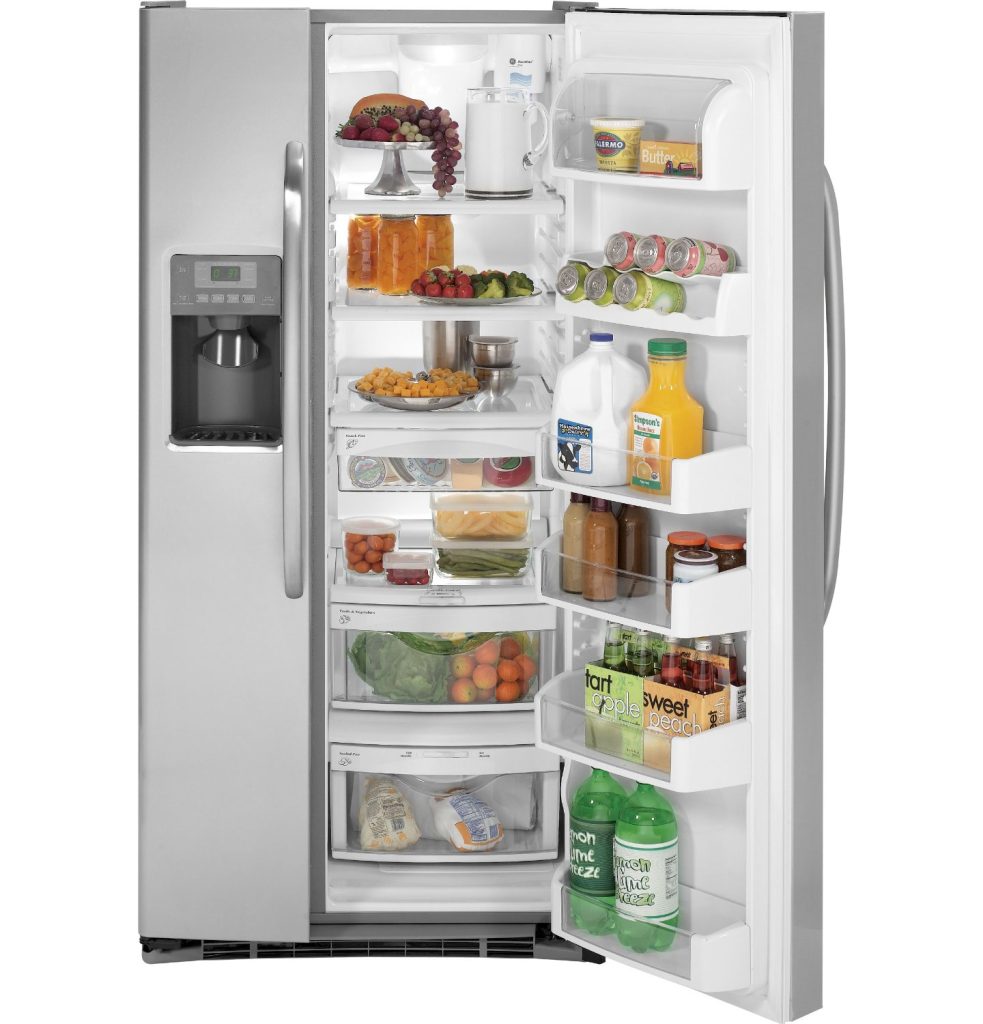
| French-door / Side-by-Side / Built-in | On average, more prone to issues — especially when ice/water dispensers are present. French-door models get poor-to-middling reliability & satisfaction ratings for many brands. |
Bottom line: simpler fridge types (top-freezer or bottom-freezer) remain the most dependable in 2025.
• Among major brands — clear gaps remain
Based on aggregated data (2014–2024 survey responses covering ~66,500 refrigerators)— here are how some of the major brands perform:
- Whirlpool — Consistently among the most reliable mainstream brands. Many repair-tech analyses and aggregate guides put Whirlpool at or near the top for “lowest failure/repair rate.” (Propel RC)
- Bosch — For certain fridge types (especially built-ins), Bosch scores high for predicted reliability and owner satisfaction. (Consumer Reports)
- GE and sister brands (basic models) — Basic top-freezer or bottom-freezer models often show decent reliability, though model-by-model variation is high.
- LG and Samsung — These are among the more troubled brands in many analyses. Issues tend to cluster around compressors (especially for certain LG models), ice-maker/dispenser failures, and overall higher repair rates.
Some analysis even suggests that for LG and Samsung, 30–37% of refrigerators need major service within 5 years — far above industry average. (Propel RC)
• Lifespan — what “long term” realistically looks like
- Among mainstream brands (especially simpler models from Whirlpool, Bosch, GE), a typical realistic lifespan under good maintenance seems to be around 12–17 years.
- For high-end or luxury-grade refrigerators (from premium makers), some models are still designed for 20+ years — but those come at much higher upfront cost and often require more expensive maintenance.
- At the same time, many modern fridges (especially feature-rich ones) appear to “wear out” earlier than older, simpler models — per aggregated owner reports and analysis of repair records.
🎯 My Take: If I Were You — What I’d Do
If I were buying a fridge now and wanted the best chance of a “buy-and-forget” experience over 10+ years, I’d:
- Pick a basic bottom-freezer (or top-freezer, if space allows) from Whirlpool or Bosch (or a simple model from GE. See this on Amazon).
- Avoid adding “nice to have but non-essential” features like through-the-door ice/water dispensers or overly complex smart functions.
- Budget for possible repair within the first 5 years — maybe plan for a small maintenance fund.
- Check warranty/after-sales support or parts availability (especially if you live outside US/EU), since older fridges tend to hold up better.
If instead I wanted a “modern, feature-rich” fridge (smart, French-door, ice/water through door), I’d be mentally prepared that it might need at least one medium-to-major repair by year 5, or that it might not last more than 10–12 years — and accept that as part of buying convenience rather than longevity. This LG model has good reviews